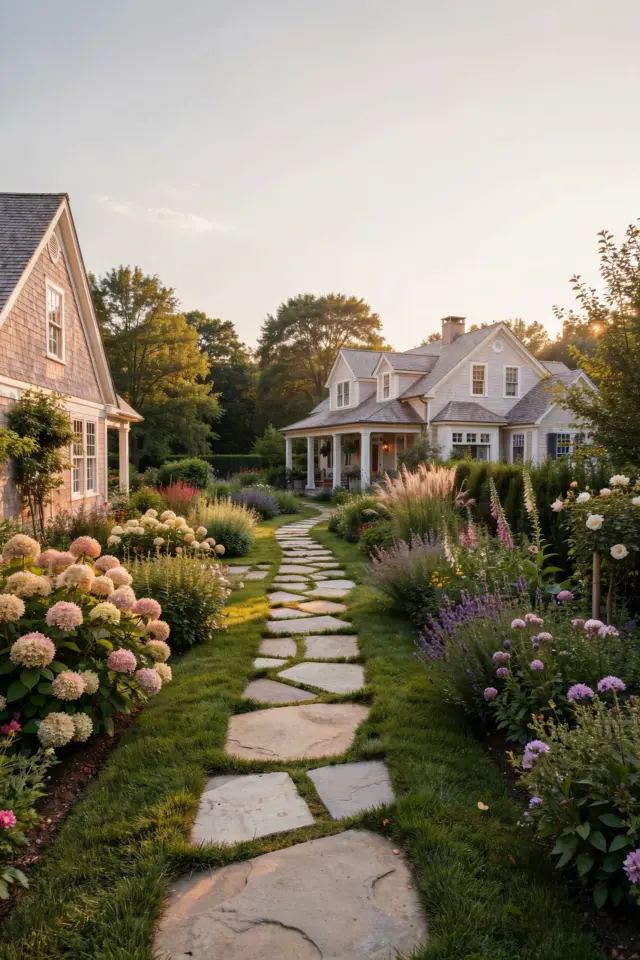
If you are planning a new outdoor space, your path design might feel like a small detail. But a poorly laid walkway can ruin the entire flow of your garden. I have seen too many Garden Path Designs that look beautiful for exactly one season and then start sinking, cracking, or simply leading nowhere useful. The truth is that most common path problems come from a handful of repeated mistakes. Below I share 21 ideas for walkways and pathways, but more importantly I explain how to avoid the traps that turn a good idea into a future headache.
Choosing a material that fights your climate and foot traffic
The single biggest mistake I encounter is picking a path material based solely on looks. A loose gravel path might be charming in a dry climate, but in a rainy area it turns into a muddy mess within weeks. Similarly, smooth flagstone looks elegant until you try to walk on it after a frost. You need to match the material to your specific conditions.
For high traffic zones like the front entry, go with something solid and slip-resistant. For a quiet garden stroll, stepping stones with ground cover between them work well. Here is a quick breakdown of common materials and their hidden weaknesses:
- Stepping stones (concrete, slate, or bluestone): Great for low traffic, but spacing is critical. Too far apart and people will step on the grass; too close and it feels awkward.
- Gravel: Budget friendly and easy to install, but requires edging to stay contained. It also shifts underfoot on slopes.
- Brick or pavers: Durable and classic, but they need a solid base and proper sand joints. Without edge restraints, they wander apart.
- Loose bark or wood chips: Soft and natural, but decomposes quickly and attracts weeds. Best for temporary or woodland paths.
- Natural flagstone: Beautiful irregular shapes, but uneven surfaces can be a tripping hazard. Use flat pieces for main walkways.
Forgetting about water flow and drainage
I have walked down more than a few garden paths that turned into small streams after a rainstorm. Water will always follow the lowest point, which is often your new path if you dig it out without thinking about grade. If you lay pavers or stones in a low spot without any drainage, you will end up with standing puddles that breed mosquitoes and crack in winter.
The fix is simple: slope your path slightly to one side or create a shallow trench with gravel underneath. For concrete or paver paths, use a porous base layer of crushed stone. If your path runs alongside a slope, dig a small swale on the uphill side to redirect runoff. Good drainage saves you from expensive repairs later.
A second drainage mistake is using solid concrete slabs without any gaps. Water needs somewhere to go. Leave small gaps between stepping stones and fill them with gravel or low ground cover like creeping thyme.
Making your walkway too narrow or too wide
Path width is one of those details that seems minor but dramatically affects how the space feels. A path that is only 18 inches wide forces people to walk single file, which can feel cramped and unwelcoming. On the other hand, a four-foot wide path through a small cottage garden looks like a driveway.
For a main walkway leading to the front door, aim for at least three feet (36 inches). That allows two people to walk side by side comfortably. For secondary garden paths, 24 to 30 inches is usually fine. If you want a more leisurely feel, go wider. If the path is purely functional, keep it narrower to save material and labor. Always test the width by laying out a garden hose or a rope before you commit.
Ignoring curves and natural flow
A straight line from point A to point B can be efficient, but it often looks harsh in a garden setting. I have seen people lay a ruler-straight path that cuts across a lovely curved lawn, and the result fights the natural shape of the yard. The opposite problem is random, aimless curves that look like a snake that lost its way.
Good paths follow the lay of the land. If your yard has a gentle slope, let the path flow along the contour. If you want a curve, make it purposeful. A curve that leads toward a focal point such as a bench, a tree, or a gate feels intentional. Try marking the path with flour or string and walk it several times to see if it feels natural. Adjust accordingly. A meandering path should still have a clear destination, even if that destination is just a hidden corner of the garden.
Skipping proper base preparation
This is the most expensive mistake of all. I have dug up too many paths that were simply installed on top of bare dirt or a thin layer of sand. Within a year, frost heave and rain settled the stones unevenly. The path looked terrible and became a tripping hazard. Base preparation is the boring part, but it determines whether your path lasts five years or
#GardenPathDesigns #WalkwayIdeas #Pathways #LandscapingInspiration #OutdoorLiving
Leave a Comment