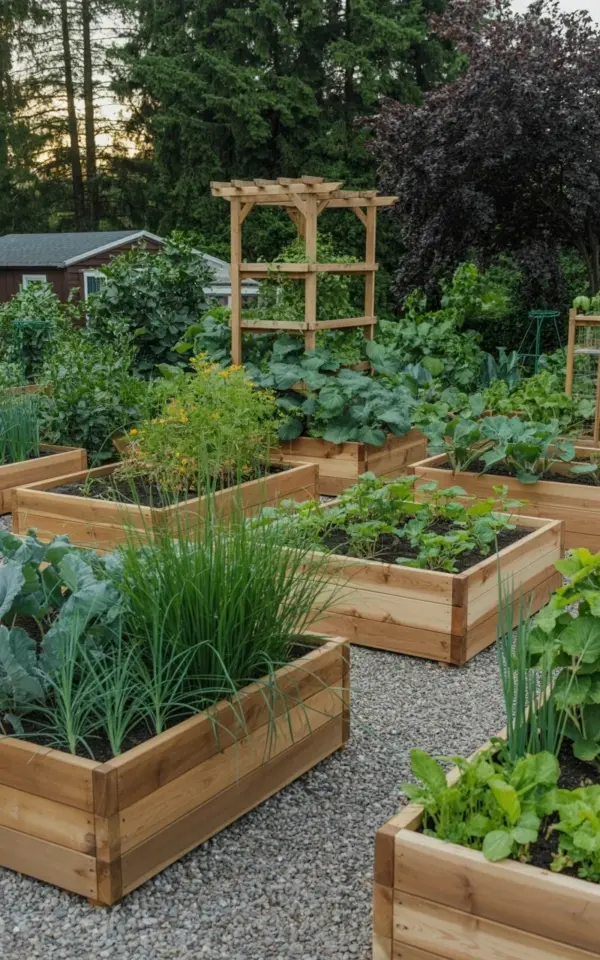
There’s something about a well-organized garden that makes my brain happy, and this cedar raised garden bed setup is exactly that. Wooden boxes in a neat row, a crisp gravel path between them, and a big trellis waiting for something delicious to climb. It’s the perfect mix of practical and pretty, and honestly, it’s making me want to start a whole new summer garden project. If you’ve been dreaming about growing your own vegetables but want it to look intentional and beautiful, these ideas are for you.
The Modern Boardwalk Look: Gravel Paths as the Backbone
Let’s talk about that gravel path in the photo, because it’s doing a lot of heavy lifting. It’s not just there to look nice, it’s actually a super smart choice for a vegetable garden. The light gray stones define the space so clearly and keep things tidy, which I love.
Gravel paths let water drain easily. That means less mud and fewer puddles after a summer storm. Plus, it creates a clean, dry place to walk while you’re checking on your tomatoes or snipping some basil for dinner.
Another bonus of gravel? It keeps weeds down. A thick layer of it on a solid base will save you hours of pulling grass from between your beds. If you want that professional landscape look without a ton of upkeep, this is your best bet.
The Big Trellis: Growing Up Instead of Out
Ok so, that tall wooden trellis leaning against the trees is the star of the show for me. It’s practically begging for climbing plants. You could grow cucumbers, pole beans, or even some flowering vines to add a pop of color to the green.
A strong trellis also helps with airflow around your plants. When leaves aren’t crowded on the ground, they dry faster after rain, which means less chance of powdery mildew and other issues. I learned this the hard way with a zucchini plant that took over my entire path one year. Not fun.
- Set up your trellis on the north side of your beds so it doesn’t shade the lower-growing veggies.
- Use sturdy materials, cedar and heavy-gauge wire work best for heavy crops like squash.
- Plant your climbers at the base and guide them upward early, they’ll figure it out from there.
Think about what you actually eat. If you’re not a big cucumber person, try sugar snap peas or even a few morning glories for sheer visual appeal.
Mix in Something Unexpected: The Purple Foliage Trick
One detail in the photo that caught my eye was that purple-leafed tree in the background. It’s not a vegetable, but it adds so much depth to the whole scene. You can bring that same idea right into your cedar garden beds.
Planting something with dark, burgundy leaves next to your bright green lettuce is honestly so pleasing to look at. Try adding a few deep purple basil plants or some red-leafed amaranth. They’re edible, and they make the whole bed look intentional.
I’m not gonna lie, I used to think vegetable gardens were just about function. But the older I get, the more I want the space to feel like a retreat, even if it’s just outside my back door. A little contrast in color goes a long way toward that feeling.
Keep the Summer Harvest Flowing: Succession Planting
Those neat rows of leafy greens in the photo are a great reminder that a summer garden is a living, changing thing. You don’t just plant it once and walk away. To get the most out of your cedar raised beds, try succession planting.
Here’s the idea: instead of planting a whole row of lettuce at once, plant a few feet of it every couple of weeks. That way, you never have a giant pile of lettuce all at once. You get a steady supply all season long, which is way better if you’re cooking for just a few people.
This works great for greens like arugula, spinach, and radishes. Once a batch is done, pull it out and replant that section with something new. In the late summer, that might be a fall crop of carrots or some cold-hardy kale.
Herbs Are the Heart of the Vegetable Garden
Notice how the photo has herbs tucked right in among the vegetables? That’s not an accident. Herbs are the workhorses of the kitchen garden. They get along fine with veggies, they attract good bugs, and they smell incredible.
Plant basil near your tomatoes, they’re classic companions. Put some rosemary at the edge of the bed where it can dry out a bit. And honestly, just plant a lot of parsley. You’ll find a million uses for it, and it looks so pretty and lush.
One more thing, if you want a summer garden that feels alive, include some mint. But keep it in a pot unless you want it taking over the whole box. Trust me on this one.
Bring It All Together With Edible Flowers
I have to make a case for adding edible flowers to your raised beds. They’re not just for fancy restaurant plates. They’re a secret weapon for a garden that looks gorgeous and feeds you too.
Tuck some nasturtiums in the corners of your cedar boxes. Their orange and yellow blooms are bright and cheerful, and they have a nice peppery taste that’s great in salads. Calendula is another easy one, gold and sunny, and it’s nice added to soups or steeped in tea.
Plus, the flowers will bring in pollinators, which your tomatoes, peppers, and squash absolutely need to produce a big harvest. It’s a win-win situation, honestly.
So, what would I plant in this beautiful garden? Some heirloom tomatoes against that trellis, a few mounds of zucchini, and as many herbs as I could squeeze in. It’s the kind of setup that makes you want to go outside first thing in the morning with a cup of coffee, just to see what’s new. If you’re planning your own raised bed garden this summer, borrow some of these ideas and make it your own. I’d love to know what’s going into your garden this season, drop a comment or come say hi over on Pinterest! 🌱
#RaisedGardenBeds #CedarGarden #GravelPath #SummerGarden #VegetableGardenIdeas
Leave a Comment