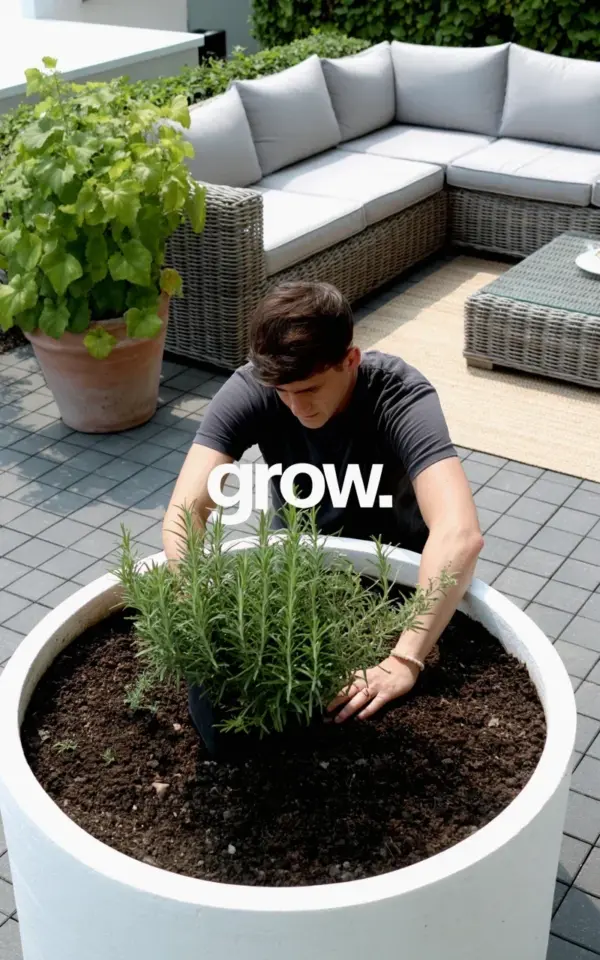
One thing I noticed right away in that photo is the size of the planter compared to the person kneeling next to it. That wide white circle of fresh dark soil isn’t just a decorative choice, it’s the entire secret to keeping rosemary happy. Container gardening is full of these quiet little failures, but the rosemary plant is the one that suffers most when you try to squeeze it into something smaller than it needs. Honestly, I’ve killed more herbs in pots than I care to admit, and almost every single death was caused by not giving the roots enough real estate.
Most people see a tiny rosemary transplant and grab a tiny pot. It makes sense in the moment. The plant is small, the pot is cheap, and you’re just trying to get it started. But here’s the thing: rosemary grows like a weed when it’s happy, and it will absolutely strangle itself in a container that’s too snug. The roots hit the wall, they circle around, and eventually the whole plant throws up its hands and turns brown. You don’t need a nursery pot, you need a permanent home with room to roam.
Why a Big Planter Matters for Root Development
Rosemary roots are surprisingly aggressive. They don’t just sit there; they want to spread out and dig deep. In the ground, this plant sends roots down several feet without breaking a sweat. In a pot, it’s all on you to make up for that lost space.
A bigger planter does three things that keep rosemary alive. It gives the roots a place to expand, it holds more water for slower drying, and it keeps the soil temperature from swinging wildly all day. A small pot heats up like a rock in the sun and freezes out at night, which is a fast track to a crispy, unhappy plant. That wide white planter in the photo isn’t just roomy, it’s functional.
The Golden Rule: Match the Pot to the Full-Grown Plant
Go big or go home, but also, go deep. Rosemary’s roots chase moisture, so a shallow dish will never cut it.
When I talk about a big planter, I mean at least 16 to 24 inches in diameter, and honestly, bigger is better. If you’re looking for planter ideas, imagine the end goal, not the tiny transplant sitting in front of you. That little sprig will be a woody, two-foot-tall shrub with branches sprawling everywhere in about 18 months. Give it a pot that could hold a small tree.
Not All Pots Drain Equal (And Drainage Is Everything)
Here’s a mistake that kills more rosemary than cold weather: bad drainage. Rosemary is a Mediterranean native, it likes things dry and gritty, and it will rot if the roots sit in soggy soil.
That fresh dark soil in the photo looks rich and wonderful, but if the planter doesn’t have generous drainage holes, you’re just building a swamp. Check the bottom of any container before you commit. If the holes are tiny or clogged, drill more. Or grab a terracotta pot, which breathes naturally and helps soil dry evenly on the edges. Glazed ceramic looks pretty but holds moisture like a bathtub in winter; you’ve been warned.
Soil Matters More Than the Pot’s Looks
Don’t just throw any bag of dirt in there. Rosemary needs a fast-draining, slightly sandy mix that dries out between waterings. Good planter ideas always include the right medium, the container is only half the battle.
I like to mix a high-quality potting soil with about a third perlite or coarse sand. That sounds fancy, but it’s just about mimicking the rocky hillsides where rosemary grows wild in the Mediterranean. The roots need oxygen. Heavy garden soil compacts into a hard brick in a pot, starving the roots and holding water where it shouldn’t. Give your rosemary something loose and grainy to sink into.
Growing Rosemary in a Container: Watering the Right Way
The top mistake after pot size is watering on a schedule. People think, “I’ll water this every Monday,” and that lazy routine turns into root rot real quick.
Here’s the rule: stick your finger in the soil, about two inches down. If it feels dry, water deeply. If it’s still damp, walk away and leave it alone. That big planter holds more moisture, which is good, but it also means you need to be patient. The top might look dry while the bottom is still wet. Also, avoid splashing water on the leaves; wet foliage invites fungal trouble, and you don’t need that kind of drama on your patio.
Spacing and Positioning for Maximum Sun
That large white planter gives multiple rosemary plants room to breathe, which matters more than you’d think. Cramped plants compete for light and airflow, and poor circulation makes them weak and pest-prone.
Give each plant a solid six to ten inches of space between it and the next one. And whatever you do, place the planter in full sun. Rosemary is a sun worshipper, it wants six to eight hours of direct light minimum. That patio with the sectional and terracotta pots looks idyllic, but if it’s shaded most of the day, the rosemary will sulk. Watch your light carefully.
Perennials: Rosemary Keeps Coming Back
One of the best parts about growing rosemary is that it isn’t a one-season wonder. This is a perennial shrub, and with a little care, it comes back year after year.
That means the pot you choose should be sturdy enough to survive the seasons. Lightweight plastic can crack in winter cold, though it’s cheap to replace. A heavyweight ceramic or wood planter will last longer and give the roots more insulation. Yes, you can bring rosemary indoors when frost threatens, just keep it in a bright, sunny window away from cold drafts. Ok so, the investment in a bigger pot pays off for years of harvests.
Pruning and Harvesting Without Killing the Plant
Once your rosemary is settled in that big planter, you’ll want to use it. Snip sprigs for roasted potatoes, grilled meats, or just to smell your fingers afterward, it’s a lovely little sensory treat.
Just don’t go full saw-blade crazy on the pruning. Actually, this might be the one mistake people make after the plant is already happy. Never cut back into old, woody stems that have no green leaves; those parts don’t regrow reliably. Only take fresh green growth from the top and outer edges. This keeps the plant bushy and productive instead of leggy and bare.
Final Thoughts on Letting Rosemary Spread Out
Look, container gardening has a learning curve, but rosemary is forgiving if you respect its need for room. Give that plant a big planter, gritty soil, and patience with watering, and it will reward you. We’ve all lost an herb to a tiny pot at some point, the key is to stop repeating that pattern.
Go ahead and repot your rosemary into the biggest, prettiest container you own. Kneel down, get your hands dirty, and let it grow. While you’re at it, take a look at the rest of your patio setup and see what else deserves a little more breathing room. The answer might surprise you.
Leave a Comment