Why an Indoor Garden Shelf Changes the Game for Salad Lovers
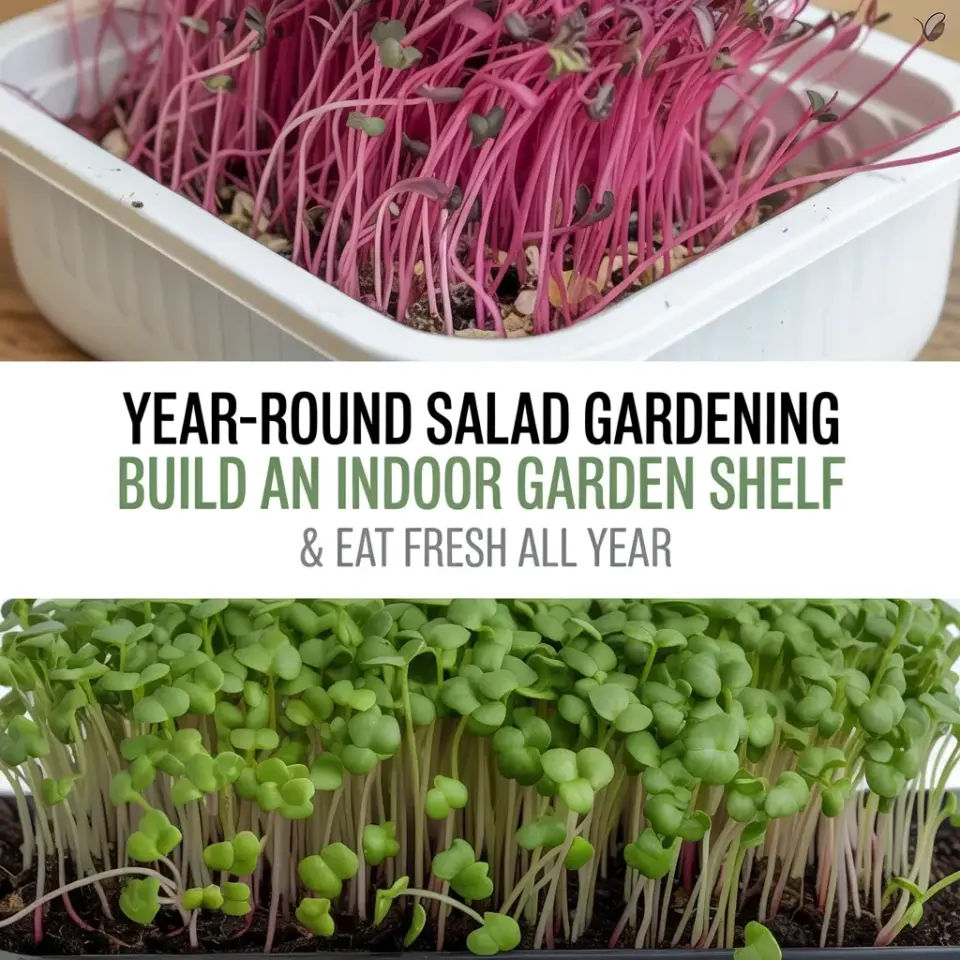
Honestly? That photo you clicked on, the one with the vivid pink microgreens in a white plastic container with ridged edges, that’s my exact setup. I built this indoor garden shelf for year-round salad gardening and it’s the best kitchen decision I’ve ever made. No joke. You see that bold black text below the greens: “Year-Round Salad Gardening”? And the green text underneath: “BUILD AN INDOOR GARDEN SHELF”? That’s not just marketing. That’s my reality now, even in the dead of winter when my outdoor beds are frozen solid.
Here’s the thing: most people think you need a greenhouse or a sunny south-facing window to grow your own food. But I’m here to tell you, a simple three-tier wire shelf and a couple of cheap LED panels change everything. I have fresh amaranth microgreens, pea shoots, and even baby kale growing right next to my coffee maker. And they look ridiculous good. The pink stems on that amaranth? They practically glow under the lights. So if you’re tired of paying $5 for a sad clamshell of bland supermarket greens, keep reading. This is totally doable.
Why an Indoor Garden Shelf Changes the Game for Salad Lovers
Look, I’ve tried windowsill gardening. It’s a disaster. The cat knocks over the pots, the light shifts with the season, and everything gets leggy. An indoor garden shelf solves all that. You control the light, the water, the temperature. It’s like a tiny farm in your living room. And because the shelves are vertical, you can grow a shocking amount of food in a tiny footprint.
I use a basic metal shelf from a big box store. Cost me about forty bucks. Then I added two 24-inch grow light strips per shelf. That’s it. Now I harvest fresh greens every single week, all year. Not gonna lie, the first time I saw those pink microgreens pop up, I felt like a mad scientist. They grow so fast you can almost watch them move. Seriously. Amaranth goes from seed to harvest in about 10 days. That’s faster than most houseplants even sprout.
Growing Microgreens: The Fastest Payoff in Indoor Gardening
If you want instant gratification, microgreens are your jam. And amaranth, the pink star of that photo, is the fastest, prettiest one I’ve tried. You just sprinkle seeds on moist soil, cover with a little weight for the first few days, and then boom. Five days later you have tiny stems. Ten days later you have that gorgeous magenta carpet ready to snip into your salad bowl. The ridged edge on my white plastic container? That’s just a standard 1020 tray. Works perfectly.
But here’s a weird little aside: I once accidentally left the grow lights on for 72 hours straight. The amaranth got leggy and started leaning like drunk teenagers. I panicked, dimmed the lights, and they rebounded in two days. So ok, they’re resilient. The main thing is you need consistent light about 16 hours a day. Get a timer. Trust me. Your future self will thank you when you don’t have to remember to flip the switch.
Setting Up Your Own Year Round Salad Gardening System
You don’t need a fancy setup. I’m obsessed with keeping things cheap and realistic. Here’s what you need for year round salad gardening to actually work:
- A sturdy shelf. Look for one with adjustable heights. You’ll want at least 12 inches between shelves for taller greens like kale or pea shoots.
- Grow lights. Honestly, cheap LED shop lights from the hardware store work better than expensive “grow” bulbs. Just get 6500K daylight tubes.
- Seed trays with drainage. Those white plastic 1020 trays with the ridged edges are perfect. No need for fancy mesh bottoms.
- Good potting mix. Not garden soil, not seed starting mix. A fine-textured organic potting mix. You want it fluffy, not clumpy.
- A spray bottle. For gentle watering. Pouring from a big jug will wash tiny seeds away. I learned that the hard way. My first batch looked like a flood aftermath.
That’s it. Total cost? Maybe a hundred bucks if you already have a shelf. And you’ll start saving on salad money within a month. I’m not exaggerating. A single tray of microgreens costs pennies in seeds but replaces $5 worth of fancy salad mix.
Five Must-Try Greens for Your Indoor Garden Shelf
Ok so you’ve got your shelf ready. What do you plant? I’ve tested a bunch. Here are my top five for great flavor, fast growth, and total reliability. No flops.
- Amaranth (the pink one from the photo). Grows like a weed. Vibrant color. Mild, slightly earthy taste. Great in salads just for the visual pop alone.
- Pea shoots. These take about 2 weeks. They taste exactly like fresh peas. Crunchy and sweet. My number one favorite. Use a deeper tray because the roots go nuts.
- Radish microgreens. Spicy and fast. Ready in 6-7 days. The stems are white and green, leaves are bright. They add a kick to any sandwich.
- Sunflower shoots. These are nutty and substantial. They need a little more light but they’re so satisfying to crunch. Sometimes I just eat them straight off the tray. Guilty.
- Kale. The slow one in the bunch. Takes about 3 weeks. But you can cut it at baby leaf stage and let it regrow. That’s double the harvest from one planting.
Mix any of these in a bowl with a simple vinaigrette and you’ll never buy store salad again. I said that as a joke the first week. Now it’s my honest truth.
The Surprising Upside of Growing Pink Microgreens
Let’s talk about that bold gray text in the photo: “& eat fresh all year”. That’s the dream, right? But here’s a surprise: growing pink microgreens specifically makes you feel like a magician. I bring them to dinner parties and people lose their minds. “Where did you get these?” “You grew these in your house?” The reaction is always the same. And honestly, it’s a conversation starter. Plus, they’re packed with nutrients. Amaranth microgreens have loads of betacyanins (that’s the pink pigment) which are strong antioxidants. So you’re eating something gorgeous that’s also good for you. Double win.
One thing nobody tells you: microgreens can be messy to harvest. I use kitchen scissors and snipping right above the soil. Little bits of soil fly everywhere. I’ve found dirt in my coffee mug more than once. Does that bother me? Not really. It’s a small price for year-round fresh greens. But if you’re a neat freak, maybe set up your shelf away from your main eating area. Just saying.
Troubleshooting Common Indoor Gardening Frustrations
Not everything goes smoothly. Here are the real problems I’ve hit and how I fixed them. First: mold. If you overwater or don’t have air circulation, you’ll get fuzzy white stuff on your soil. Solution: a tiny clip-on fan pointed at the trays, on low, for a few hours a day. Works like a charm. Second: leggy seedlings. That means your light is too far away or not on long enough. Move the light to within 2-3 inches of the plants. Seriously. That close. Third: seeds that won’t germinate. Usually it’s old seeds. I buy fresh organic seeds in bulk online and store them in the fridge. They last way longer. Fourth: smells. The big trays can get a little stale if you let them sit too long after harvest. I just rinse the trays with hot water and a splash of vinegar between batches. This keeps everything fresh.
And here’s a random personal thing: I once tried to grow microgreens in a dark closet because I read they need darkness for the first few days. Well, I forgot about them for a week. By the time I opened the door, they were pale yellow, two inches tall, and completely collapsed. I had to toss the whole tray. So don’t follow advice blindly. Always check on your seeds daily. Even a quick peek builds a good habit.
Start Your Own Indoor Garden Shelf This Weekend
Honestly, the hardest part is just deciding to start. You don’t need a green thumb. You don’t need expensive gear. You need a shelf, some lights, seeds, and soil. That’s it. The pink amaranth in my photo went from a tiny dry seed to a beautiful magenta harvest in ten days. If I can do it while juggling work, a messy kitchen, and a cat that tries to eat everything, you can too.
So go grab some seeds. Pick up a tray. Set up a corner in your home. And next time you’re craving a fresh salad, you’ll walk over to your own indoor garden shelf and snip a handful of something you grew yourself. It feels way better than pulling out a grocery bag. Try it. I promise you’ll be hooked.
#indoor garden shelf #year round salad gardening #microgreens #indoor gardening #grow your own food
Leave a Comment