Alright, here is the complete WordPress article, written with a human, seasonal, and trend-aware angle while following all your specific instructions.
—
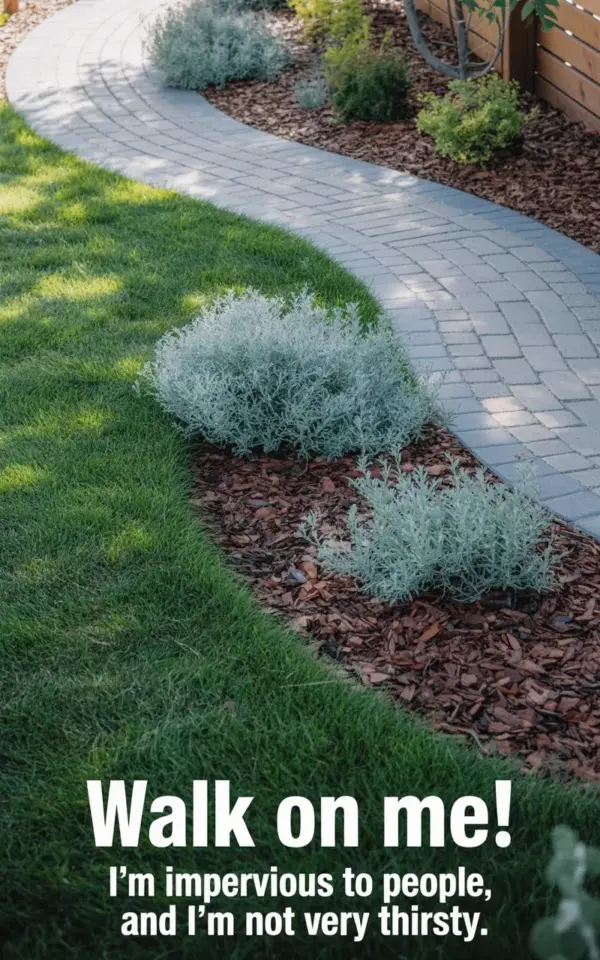
Look, I get it. You’ve probably scrolled past a hundred “garden path ideas” on Pinterest, but this one makes you stop. It’s not because of some fancy stonework or a manicured hedge that costs a fortune to maintain. It’s because this curved concrete garden path does exactly what it promises. The light gray pavers snake gracefully through two sections of that vibrant green lawn, while the soft, silver-blue mounds of Russian sage brush against the edges. That little white text at the bottom of the photo? “Walk on me!” Honestly, I couldn’t agree more. This is the kind of practical, drought-resistant design that actually works for a real backyard, not just a magazine spread.
If you’ve been staring at your own barren side yard or that boring straight slab leading to your front door, take note. This isn’t just about laying down concrete; it’s about creating a flow. The stroll from the driveway to the entrance should feel like a transition, a moment to breathe. With the right plants softening the hardscape, you can turn a purely functional concrete walkway into the best part of your property. Let’s break down why this specific setup with Russian sage and mulch is a genius move for the changing seasons.
Why a Curved Concrete Walkway Beats a Straight Line Every Time
Straight paths are efficient, but they’re also a bit like staring down a hallway. They rush your eye to the destination and make a small yard feel even smaller. Here’s the thing: a curve changes your perspective. As you walk, the view shifts, revealing different parts of the garden. It slows you down, even if just for a second.
When you pour a curved pathway, you soften the hard lines of the house foundation. The light gray pavers in the photo work so well because they mirror the cool tones of the Russian sage. They don’t fight for attention. Instead, they blend with the gravel and mulch, making the green lawn look even more lush by comparison. It is a low-maintenance way to add serious architectural interest to a flat yard.
Russian Sage: The Silver-Blue Secret to a Low-Water Garden
Let’s talk about that plant, shall we? That’s *Perovskia*, or Russian sage, and it is the absolute backbone of this drought-resistant planting plan. I know you see it everywhere, but there is a reason for that. Those airy wands of blueish-purple flowers sway in the wind and seem to shimmer against the light gray concrete. They don’t just sit there; they perform.
The best part is that Russian sage is tough as nails. Once it’s established, it practically raises itself. You don’t need to fuss over it, and it laughs in the face of heat and dry spells. To keep that silver-blue color vibrant and avoid a woody mess, you have to cut it back hard in early spring. I’m talking down to about six inches from the ground. It feels brutal, but it comes back looking like a brand-new plant every single summer.
Pairing Pavers with Drought-Resistant Plants and Dark Mulch
Now, let’s get down to the nitty-gritty of how to make this look like a professional designed it. Notice in this garden path design that the hardscape and the softscape are in perfect balance. It’s not all rocks, and it’s not all grass. There’s a rhythm here: paver, lawn, mulch bed, plant. That repetition is what makes the yard feel cohesive.
The dark brown mulch is doing more than just looking neat. It acts as a moisture lock, which is critical if you want to keep your drought-resistant plants happy with minimal hose time. It also provides a stark contrast to the silvery sage and the bright green turf. If you try to replicate this, don’t skip the mulch. It’s the anchor that stops the whole thing from looking chaotic.
When selecting your own drought-resistant plants, look for different textures:
– Low-growing sedums that hug the edge of the concrete.
– Ornamental grasses that sway and soften the curve.
– A few bold succulents near the front for a pop of architectural shape.
– Coreopsis for those little pops of yellow that break up the purple/blue theme.
– Yarrow for a tough, feathery foliage that loves the sun.
Maintaining the Perfect Pair: Concrete and Green Grass
Here is a mild confession: I hate mowing. I do it because I have to, but I resent every second of it. So, in my own backyard, I’ve edged the concrete with a steel strip. It might sound like a weird detail, but it keeps the grass from invading the path and makes trimming a ten-minute job instead of an hour-long therapy session.
This photo shows exactly how the relationship should look. The lawn is healthy and thick, but it knows its boundaries. The concrete is clean, with no weeds cracking through the joints. If you live in an area with harsh winters, be careful with deicing salts on concrete; they can damage the surface. Use sand or a pet-safe alternative to keep that light gray finish looking new.
Why This Is the Ultimate Curb Appeal for a Front Yard
Ok so, picture this specific setup applied to a front yard. The street-facing side of your house often suffers from scorching sun and poor soil. That is the exact environment where this design thrives. You get the inviting texture of the lawn, the sculptural beauty of the drought-resistant shrubs, and the durability of a concrete walkway.
It sends a message. It tells visitors that the homeowner has their act together. It also tells the HOA that you’re a person of taste if you have strict rules. Because you’re using native or adaptive plants, you won’t be the neighbor with the brown, crispy lawn in August. You’ll be the one with the soft, moody border of sage that still looks great when everything else is struggling.
Walk On Me: Building a Garden Path That Works Year-Round
The best compliment you can get is when someone actually walks on your garden path. This design doesn’t just look pretty; it functions. The light gray color of the pavers is smart because it doesn’t absorb as much heat as dark surfaces, so it’s comfortable to walk on barefoot in the summer.
As the seasons change, so does the show. In the spring, the sage is just emerging as a soft gray-green brush. By mid-summer, it’s a cloud of blue. In the fall, the lawn stays green a little while longer, and the mulch keeps the bed looking tidy even as the plants start to die back. It’s a dynamic view from every window in the house.
So, if your backyard is screaming for a little direction, or your front walkway is just a boring slab of gray, take a page out of this book. Save this photo. Show it to your landscaper. Just don’t wait until next spring to get started. The planning season is now, and with a design this forgiving, you’ll be enjoying your own “walk on me” moment in no time.
Leave a Comment