Picture this: the temperature has dropped just enough that you can smell woodsmoke in the air, and the blue agave plants surrounding your fire pit are lit up from below like something out of a modern art museum. You are not just staring at a pile of burning logs in a patch of dirt. You are looking at a nighttime garden design that actually works with the desert landscape instead of fighting against it. If you have been scrolling through backyard inspiration boards wondering how to make your outdoor space feel intentional after dark, this is the firepitlandscaping idea you need to save.
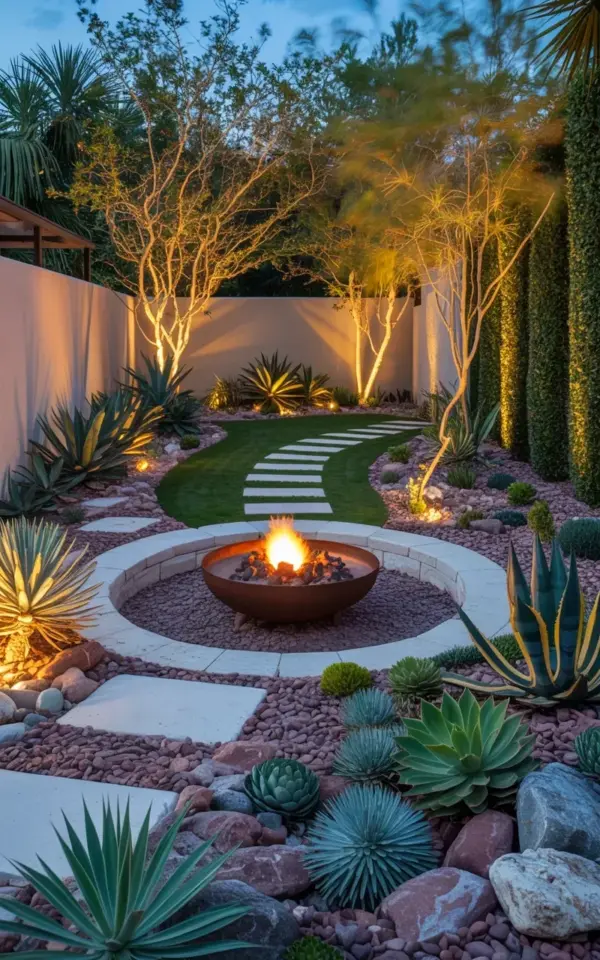
The scene in the photo that started this whole article is almost unfair, it looks that good. There is a modern, circular fire pit in the middle. The metal is dark, the flame is active and alive, and the whole thing sits inside curved stone borders that do not look rigid or forced. The path leading to it is made of white stepping stones that disappear toward a beige wall. Honestly, the details matter here, the reddish-brown stones circling the succulents, the decorative rocks in different sizes, the way the illuminated trees frame the whole thing. It is a look that feels high-end but completely buildable.
Why Blue Agave and Succulents Are the Ultimate Fire Pit Companions
Here is the thing about succulents and a roaring fire: they are both perfectly suited for dry, warm conditions. Blue agave, in particular, has that thick, waxy foliage that just shrugs off reflected heat. You won’t look out the window the morning after a long fall evening to find your plants scorched or drooping.
The structure of the agave is what does the heavy lifting in this design. Those spiky, architectural leaves fan out in a perfect rosette, and when the firelight catches the blue-gray tones, they look like they are glowing from the inside. I have sat next to this setup myself, and the way the shadows dance across the ridged leaves is mesmerizing.
But it is not just about aesthetics. These plants are tough. They are drought-tolerant, which means you are not running a sprinkler line right next to your fire feature. And they don’t drop a ton of debris, which is a small thing until you realize you are not constantly fishing leaves out of the fire pit before lighting it. Pair them with low-growing sedums or echeverias, and you have a maintenance-free border that looks intentional.
The Anatomy of a Modern Circular Fire Pit
The round shape in the reference photo is a smart move for a garden, and here is why: a circle creates gathering, there is no head of the table, no awkward corner. Everyone sits equidistant from the flame. The dark metal band in this design acts as a clean, minimal rim that does not compete with the plants for attention.
Notice how the fire pit itself is slightly recessed or at least sits flush with the surrounding stone. That matters. When the fire is lit, you want to see the flames, not the mechanics of the burner or the rim of a cheap bowl. A low profile keeps sight lines clear, so the plants in the curved beds become part of the fire circle rather than obstacles behind it.
The stepping stones leading away from the pit are just as important as the pit itself. White stone in a night garden? Look, it is a smart way to guide footsteps without installing harsh landscape lighting. The path catches the glow from the fire and the uplights on the trees, which means you are not fumbling around in the dark with your phone flashlight.
Layering Textures and Stone Edging for Visual Depth
What makes this fire pit landscaping feel rich is not the size of the yard or the cost of the plants. It is the layering of materials. You have the dark, soft charcoal of the metal center, the warm reddish-brown of the border stones, the smooth white of the stepping stones, and the varied gray-greens of the agave and succulents.
So don’t just plant succulents in a ring and call it done. Use the stone edging to create curved beds that gently curve around the fire feature. In the photo, you can see how the reddish-brown rocks are stacked or placed in a way that provides a visual boundary without creating a fortress wall.
Here are a few ideas for your own stone setting:
– Use a mix of granites or river rock in the same color family to keep it cohesive.
– Vary the size of the decorative rocks; a few large boulders anchor the space, while the smaller pebbles fill the gaps.
– Leave bare dirt between the stepping stones for a more organic, desert-meets-modern vibe.
– Sink the edging slightly into the soil so it looks like it belongs there, not like it was dropped onto the ground.
Lighting the Scene: Making the Trees Glow and the Flame Pop
You have the plants and the hardscape, but the real magic of this nighttime garden is the artificial light. The illuminated trees in the background are doing something subtle that is easy to miss at first glance. They are not floodlights that wash everything out. There is a warm, amber glow coming from the base of the tree, which creates a backdrop curtain of light behind the fire itself.
For your own fall evenings, you want to mimic this by using uplights on any vertical element. It could be a tall palm, a mature oak, or even a big potted cactus. The trick is to bounce the light off the trunk and canopy, not directly into the eyes of your guests.
The flames are the main light source, so keep any other lights dimmed to around 10 percent of full brightness. You want the fire to be the star. If you are using the fire pit for actual fall gatherings and not just for looks, consider adding a low-voltage lighting system on a separate dimmer switch. That way, you can adjust the scene based on whether you are cooking smores or just enjoying the quiet.
The Nighttime Garden Feel: Nocturnal Scents and Foliage Colors
There is a sensory side to this design that gets overlooked when you are just looking at a static photo. When the sun goes down, the air cools, and the plants release different scents. The resinous smell of agave is subtle, but it mixes with the wood smoke in a way that is hard to describe until you have experienced it.
The foliage colors also shift under the glowing flames. The blue tones in the agave cool down the intense orange of the fire, which is a clever trick to keep the palette looking sophisticated instead of looking like a campsite in a dirty tent. The red and beige stones in the border pick up the firelight, warming the scene. It is a balance of cool and warm, and that balance is what makes it look expensive.
If you have a smaller yard, you do not need a massive circular pit to achieve this. Use a smaller portable metal bowl and surround it with containers of succulents. Honestly, the same effect works.
Practical Fall Fire Pit Landscaping Tips for the DIY Crowd
Every time I write about a landscape like this, I feel the need to bring everyone back down to earth. This is a beautiful photo, but do you know what it takes to get there? A weekend of labor and some planning.
Before you buy a single agave, check your local utility lines. I am not kidding. A friend of mine once spent a whole day digging a trench for a gas line and hit a cable line that was not even marked properly. Save yourself the headache and call the dig line first.
Here is a quick rundown of what you need to tackle this project:
– Determine the fire pit fuel source, gas is convenient, wood is cheaper and more authentic.
– Pick fire-resistant plants; agave, sedum, and most succulents are naturally fire-resistant due to their high water content.
– Use a weed barrier fabric under the gravel to stop fall leaves from decorating your stone edges.
– Plan your seating before you plant, you need at least 30 inches of walking space around the flame.
When you are planting the agave, remember that drainage is everything. They hate wet roots more than they hate cold weather. If you have heavy clay soil, build a small mound of sandy soil for each plant before setting it in.
Bringing the Desert Vibe to Cooler Climates
One of the best things about getting into a curated ideas roundup is realizing you are not limited by your hardiness zone. If you live somewhere that gets actual frost, you might be looking at this agave garden and feeling a little left out. Let me reassure you: you can still do this look.
The trick is to plant your blue agave and succulents in large containers that you can move under a covered patio or into a garage when the temperature drops below freezing. The rest of the hardscape, the stone, the fire pit, the stepping stones, stays put all year. In the summer and fall, the pots sit in the stone beds with the decorative rocks, and in the winter, they get a cozy indoor vacation.
I have a neighbor in zone 6 who does exactly this, and her fire pit setup looks absolutely authentic from August through October. The containers are big enough that nobody knows they are portable. (Just a warning, moving a fully grown agave pot is a two-person job, have a friend ready.)
The point is, do not let the desert landscape label scare you off. This is a style, not a requirement.
A Few Final Thoughts on Creating Your Own Glow
The most successful landscapes in your fall backyard gathering are the ones that feel like they were always there. The curved lines of the stone beds, the circular fire pit, the repetitive arcs of the agave foliage, they all echo each other. That repetition is what your eyes pick up on at night. It signals that someone thought about this space.
Tomorrow night, you could be sitting outside with a blanket on your lap, watching the flames reflect off those blue agave leaves. And when the smoke curls up into the cool evening air, you will not even miss the summer heat. So grab a notebook, sketch out a curve instead of a straight line, and start dreaming about your backyard setup. The fire pit is waiting, and the details are all here when you are ready to build.
Leave a Comment