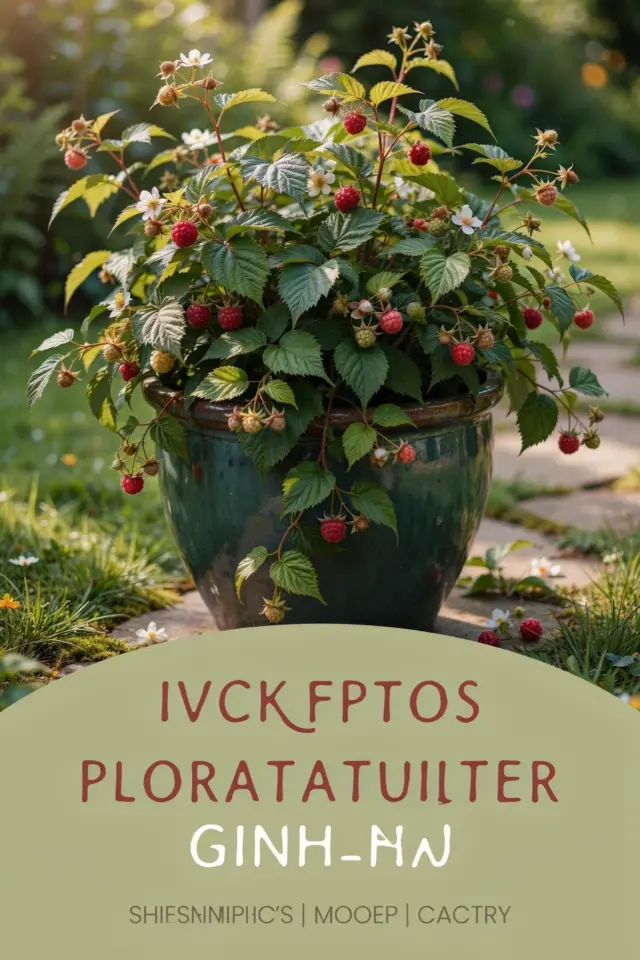
The first berry of the year tastes like a tiny, warm explosion of summer, and I picked mine this morning from a pot on my back step. I never thought I’d be able to grow raspberries in containers, not with my tiny yard that’s mostly concrete and shade. But here’s the thing: I was wrong, and I have the scratched forearms and the overflowing breakfast bowls to prove it.
If you want to grow raspberries in containers successfully, the secret isn’t a magic green thumb. It’s a big enough pot, a ridiculous amount of water, and a little bit of patience. I started my experiment two years ago with two sad-looking canes from a garden center, and last week I harvested a pint in a single sitting. Honestly, I almost cried into the colander.
Choosing the Right Raspberry Container Size
Look, you cannot stuff a bramble into a cute little herb pot and expect miracles. Raspberries are aggressive, sprawling plants that want to take over the world, and they need the real estate to do it. I started with a 12-inch pot and watched my poor plant struggle, the leaves turning crispy no matter how much I watered. Don’t do that.
You need a container that is at least 18 inches deep and equally wide, but bigger is genuinely better. I upgraded to a half-whiskey barrel (around 24 inches across) and the difference was night and day. The roots finally had room to breathe and stretch, and the plant rewarded me with about four times more fruit. One plant per pot is the rule, no exceptions, because they get territorial.
The Best Potting Mix for Raspberries in Pots
Here’s a mistake I made: I used leftover compost from my flower beds, which compacted into a brick that repelled water like a duck’s back. Raspberries want a loose, slightly acidic mix that holds moisture but still drains well. Think of it like a sponge that never gets soggy, that’s your target.
My current winning recipe is a mix of high-quality potting soil, a hefty scoop of compost, and a handful of perlite for drainage. I stay away from the cheap bagged soils that feel like dry peat dust. Also, skip the fancy potting mix with the blue synthetic fertilizer pellets, they burn the delicate roots of new canes and honestly, they freak me out a little.
Watering and Feeding for Patio Fruit
Ok so, the “thirsty” part of the Pinterest description is the understatement of the century. These plants are absolute water hogs. During a heatwave, my barrel needs a full watering can every single morning, and sometimes a top-up in the evening if the leaves look a bit droopy. A drip irrigation system or a self-watering container is a smart investment for anyone who doesn’t want to be a slave to their berry patch.
For feeding, I use a liquid seaweed or tomato feed every couple of weeks during the growing season. It sounds weird, but tomato fertilizer has the right balance of phosphorus and potassium for fruiting plants, and it works a charm on my patio fruit. Don’t go heavy on nitrogen, or you’ll get a giant green bush with zero berries. I learned that the hard way when my first plant looked like a jungle but produced nothing.
How to Support and Prune Container Raspberries
One thing nobody tells you is that raspberry canes get tall and floppy, reaching four feet high or more when they’re happy. Without support, they’ll flop over the edge of the pot and snap in a gust of wind. I have three bamboo canes stuck into my barrel, arranged like a teepee, which keeps the whole thing upright and makes picking so much easier.
Pruning sounds scary, but it’s actually dead simple. My primocane (ever-bearing) varieties produce fruit on the ends of the new canes in the fall. In late winter, I simply cut all the old, woody stems right down to the ground. It feels brutal, I won’t lie. But the plant shoots back with fresh green canes every spring, so you get a full plant that’s basically reborn.
Keeping Pests and Birds Away from Your Berry Garden
The birds started eyeing my berries the second they turned pink, and they are not polite about it. A single blackbird stripped an entire cane in one morning before I even had my coffee. You need a physical barrier, and my netting cage is ugly but effective.
I also had a minor battle with aphids last year. And look, I’m lazy, so I didn’t want to spray anything. I just blasted them off with a sharp jet of water from the hose every few days, which worked fine. A few ladybugs showed up later and that put an end to the problem entirely.
Winter Care for Container Raspberries
Here’s the thing that surprised me: potted raspberries are much more exposed to cold than in-ground ones. Because the roots are up in the air, they can freeze solid during a hard winter. Last year, we had a cold snap and I panicked, dragging the barrel into my unheated shed until the worst of it passed.
This year, I’m trying a different approach. I’m going to wrap the pot in burlap and bubble wrap to insulate the roots, and I might just leave it outside against the south-facing wall. The canes themselves are hardy, but those roots need protection. If you live in a really cold climate, sinking the pot into the ground or moving it to a garage for the winter is your best bet.
Why Growing Raspberries in Containers Works
The payoff for all this effort is pretty huge. You get fresh berries that taste like candy, picked at their peak, and they cost a fortune in the supermarket. Plus, you avoid the annoying habit raspberries have in the ground of sending runners everywhere, popping up in the middle of your lawn and ruining your flower beds.
Look, I’m not a master gardener, I just tried this out of desperation, and it worked. There are few better feelings than sitting on my step with a bowl of fruit that I grew in a five-foot square of space. It makes my tiny yard feel like a farm.
If you have a sunny spot, or even a mostly sunny one, give this a shot. Find a sunny corner, grab a big pot, and get yourself a raspberry cane this spring. You won’t regret it, just don’t forget to water them.
Leave a Comment