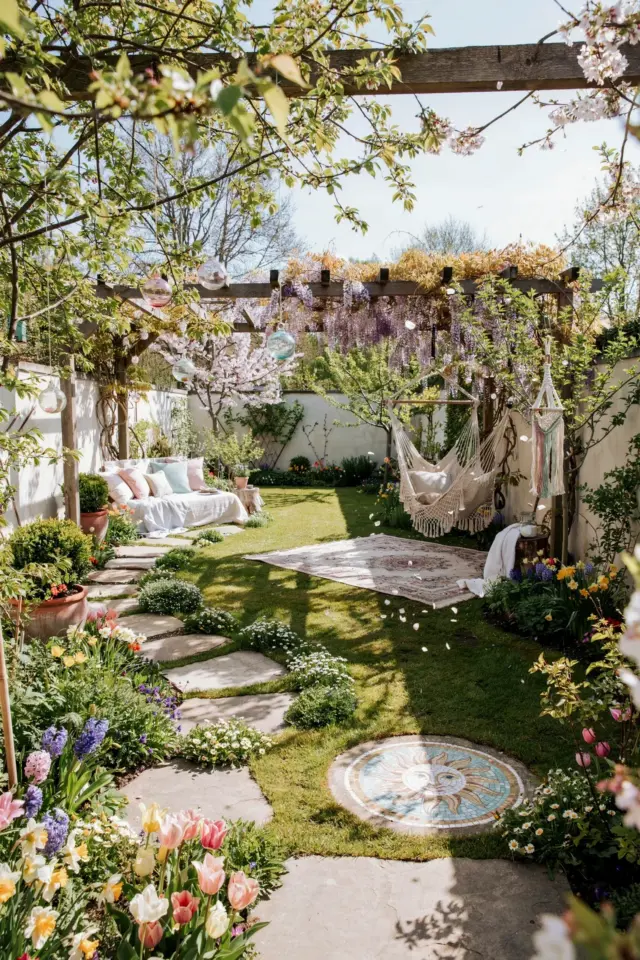
I have a confession. When I first tried to make a hippie garden in my backyard I went completely overboard. I bought a dozen lanterns in one trip, a whole set of matching cushions, a pair of new macrame plant hangers and a brand new hammock all in the same afternoon. The result? A yard that looked like a store display had exploded. Zero soul. That is the single biggest mistake I see with modern hippie gardens: trying to buy all the decor at once. Real bohemian outdoor spaces feel collected over time, not staged. And honestly? The stress of forcing a look on a deadline totally kills the laid-back vibe you are actually after. So let me walk you through the mistakes I made (and watched my friends make) so you can skip the awkward, too-perfect stage and land straight into a yard that feels like it grew there organically.
The Weekend Warrior Trap: Buying Everything Brand New in One Go
You see the photos on Pinterest: a gorgeous boho outdoor nook with tasseled pillows, a vintage rug under a low table, mismatched chairs, hanging vines everywhere. And your brain goes I need all of that, now. But here is the thing: that picture was built over years, not hours. The person who owns that space probably found the rug at a flea market three summers ago, got the table on a whim from a neighbor’s garage sale, and collected those mismatched chairs one by one from thrift stores and curb finds.
Stop yourself. Honestly, if you buy everything in one weekend you end up with a catalog look that has zero history. I did it. I had a perfect little boho corner in less than two days and it felt hollow. My friend Lisa took a different approach: she started with one hammock and a single set of mismatched pots she rescued from a secondhand shop. Then over six months she added a wildflower patch, some thrown-together logs for a bench, and a lantern she found at a church sale. Her garden feels like it belongs. Mine? It got donated to Goodwill after I realized it had no story.
The cure is simple. Pick three key pieces: a hammock, a seating spot (even if it is just a big cushion on the ground), and a container for plants. Leave everything else empty for a while. Let the space sit. Then add layers as you stumble across things that actually call to you.
Planting in Straight Little Lines Like a Suburban Front Lawn
Look, I love a neat bed of petunias as much as the next person. But a hippie garden is not supposed to look like a municipal park. The biggest mistake I see after the decor rush is people planting their wildflowers in rigid rows or perfectly spaced clusters. That is the opposite of bohemian. You want chaos, but the pretty kind. The kind where the flowers spill over pathways, where cosmos and zinnias are fighting for space, where a sunflower just pops up in a random corner because a bird dropped a seed.
If you need a little structure, start with a few taller plants in the back but then just scatter seeds randomly. I swear by throwing a handful of wildflower mix into the soil and walking away. Let them compete. Let them flop. The messier the better, honestly. And don’t be afraid of volunteers: that weed that looks kinda pretty? Maybe let it stay. I once had a self-seeded poppy show up right next to my lavender and it became the most photographed spot in the whole yard. Nature knows what she is doing.
Matching Your Furniture Like You Are Staging a Living Room
Here is a mistake that makes my eye twitch: people buying an outdoor furniture set from a big box store, all matching chairs and table with cushions in the same shade of beige or gray, then plopping one chenille throw on it and calling it boho. No. That is not a hippie garden, that is a patio with a blanket. Real bohemian outdoor spaces thrive on mismatch. You want a wrought iron chair next to a wooden Adirondack next to a round rattan stool. Different heights, different textures, different colors (or no colors, just natural wood and metal).
You do not need a lot. Two totally mismatched chairs with a crate as a side table can feel more curated than a six-seat dining set. Go thrifting, check Facebook Marketplace, look for broken furniture you can repurpose. Last year I found a rusty metal chair on the side of the road, spray painted it a faded mustard yellow, and paired it with an old wooden milking stool. They look terrible together on paper. In the garden? Perfect. The awkwardness is what makes it work.
- Don’t buy sets. Ever. Not even from Target.
- If two chairs are vaguely similar, paint one a wild color and leave the other naked.
- Mix metals: a rusty iron table with a copper pot works because the patinas are different.
Killing the Weeds That Actually Want to Help You
Ok so here is a weird personal tangent. I used to spend hours yanking out clover and creeping thyme from my garden beds because I thought they were “weeds.” But then I visited a friend’s boho yard in Portland. She had a whole section of “lawn” that was just wild strawberry and self-heal and clover. It was soft underfoot, attracted bees, and looked way more authentic than my patchy grass. She looked at me and said, “Why are you fighting the plants that want to live there?” That hit me hard.
The mistake is assuming that a laid-back boho yard needs a pristine lawn or weed-free borders. It does not. Let the clover grow. Let the dandelions bloom for the bees. Let moss creep over a stone path. The only weeds you really need to remove are the truly aggressive ones like bindweed or poison ivy. Everything else can stay. Honestly, a yard that is 70% “wild” and 30% intentional will always look more bohemian than a yard that is 100% controlled. The plants will thank you and so will your back.
Forgetting About the Ground Under Your Feet
I have seen gorgeous hippie gardens with amazing plants and perfect hammock placements but then the ground is just … boring. A square of grass. A straight concrete patio. No layering. The mistake is treating the floor as an afterthought. In a real boho yard, the ground itself should feel collected. Think a patchwork of salvaged bricks, a piece of vintage Turkish kilm (yes, you can use a wool rug outside if it is in a covered spot and you shake it out regularly), a scattering of pebbles around a fire pit, maybe a few large flat stones set into the grass as a stepping-stone path that meanders instead of running straight.
You do not need to redo your whole landscaping. Start small. I placed two mismatched thrift store doormats (one woven, one hand-painted) on my back step and it immediately gave the area a bohemian ground layer. Then I collected free bricks from a construction site and made a casual border around a flower bed. Paths do not have to be perfect. Let a few blades of grass poke through the cracks. That is the whole point.
Treating Lighting Like It Is an Afterthought
Here is a mistake I see over and over: people set up an amazing boho outdoor space during the day but at night it falls flat because they just have one harsh floodlight from the house. Or worse, they buy a pack of cheap white string lights that look like they belong at a college frat party. For a true laid-back boho yard, lighting is not a functional necessity, it is an atmosphere tool. You want soft, warm, low-intensity lights that create pools of glow rather than uniform brightness.
Do not go for perfect symmetry. Hang a few vintage kerosene lanterns (real or battery-operated) on hooks. String some fairy lights loosely through a tree branch, not in straight lines. Use a couple of paper bag luminaries with tea lights along a path. My personal favorite: a single old chandelier I found at a salvage store, spray painted in a faded copper tone, hung from a tree branch with a low-watt bulb. It drips crystals that catch what little light there is and it looks like it has been there for decades. And do not feel the need to light every corner. Dark spots are okay. Actually, they are better. Dark spots make the lit areas feel like cozy little rooms in a garden without walls.
The One Thing Nobody Talks About: Letting Go of Perfection
I kept this for last because I think it is the real root of every other mistake on this list. The idea that your boho garden needs to look like a magazine editorial is exactly what will ruin it. The hippie garden aesthetic is not about “good taste” in a traditional sense. It is about authenticity, carelessness that actually looks like care, and a willingness to let the yard evolve. If a cushion gets a little mildew because it rained? That is a patina. If your wooden chair gets a scratch? That is character. If you rearrange the pots three times in a week? That is the fun part.
I cannot tell you how many afternoons I have spent just moving one rock from here to there, then moving it back, then leaving it in the middle of the path on purpose. A garden should make you feel relaxed, not anxious. If you are stressing about whether your macrame hanger is centered or if your wildflowers are too tall, you have missed the whole point. Take a deep breath. Go sit in that beat-up, mismatched chair with a drink. The moss will grow. The clover will spread. And your garden will start to feel like yours.
Start with fewer things than you think you need. Let time do the decorating for you. And next time you see a piece of rusty garden art at a flea market, do not think does it match? Think does it make me smile? That is the only rule that matters.
Now go grab that hammock. But only one. For now. Save this little guide to your garden inspo board and come back to it when you feel the urge to buy a whole store. You will be glad you waited.
#hippiegarden #bohooutdoor #gardendesign #backyardinspo #bohemianhome
Leave a Comment