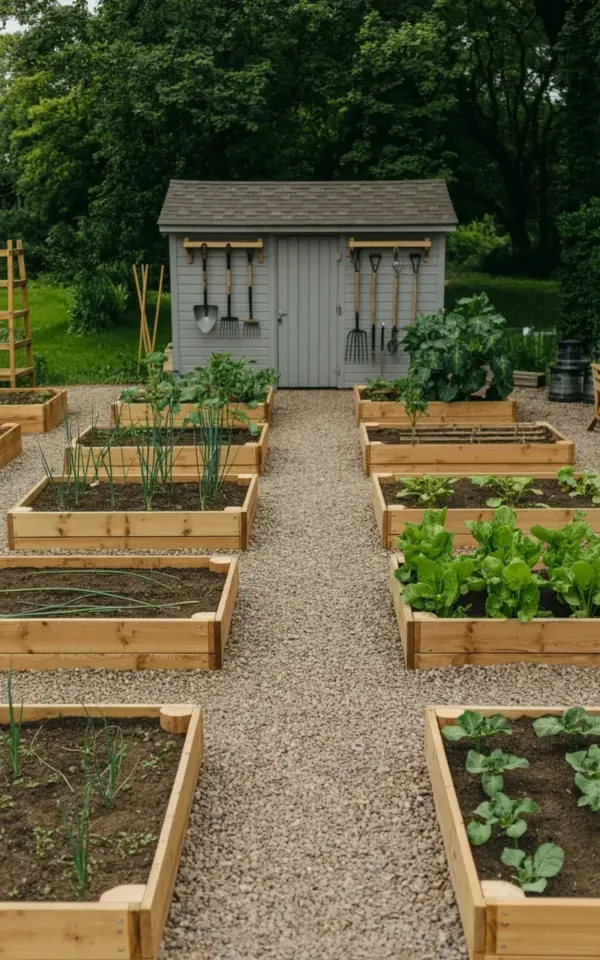
There’s a quiet moment in this raised vegetable garden that makes you forget it was built on a budget. The wooden raised beds sit in a neat, symmetrical pattern, divided by a wide crushed gravel path that leads straight to a gray garden shed with a gray door. Shovels and rakes hang right on the shed’s exterior wall, ready for action. The whole scene feels calm, useful, and completely doable for someone who doesn’t want to spend thousands.
And honestly, that’s what home gardening should look like. You don’t need a fancy kit or a landscaper. You need a few good ideas, some free weekends, and the willingness to get your hands dirty.
## Wooden Raised Beds on a Budget
The raised beds in the photo are simple wooden boxes, and that’s exactly what makes them so appealing. Cedar is beautiful but pricey. Untreated pine is much cheaper and can still last several years, especially if you line the inside with landscape fabric. Or you can use reclaimed wood from old pallets, as long as you know where they came from and avoid anything treated with harmful chemicals.
The key here isn’t the type of wood. It’s how the beds are arranged. The symmetrical layout makes a small space feel intentional. You don’t need massive beds either. Four-foot-wide beds are perfect because you can reach the middle without stepping on the soil. That keeps the earth loose and airy, which your vegetables will thank you for.
One tip from my own experience: build the beds in place, not in the garage. I once assembled a bed, dragged it to the garden, and realized the ground wasn’t level. It took another hour to fix. Do the leveling first, then drop the frame down. Trust me.
## A Gravel Path That Ties It All Together
A gravel path is one of those simple additions that changes everything. The one in the photo is light beige crushed stone, and it looks clean because it stays separate from the garden beds. No mud tracking, no weed jungle between rows, no slippery mess after rain. It just sits there looking tidy and working hard.
Crushed stone is fairly inexpensive, especially if you buy it in bulk from a local landscape supply yard. You can also use pea gravel, but crushed stone locks together better underfoot. That means less shifting and less raking. Spread landscape fabric underneath first, then add about two inches of stone. That’s enough to feel solid without disappearing into the soil below.
Here’s a weird little aside: I once spent an entire Saturday moving gravel with a small plastic shovel and a wheelbarrow that had a wobbly wheel. My back hated me, but the path looked fantastic at the end. Use a real metal shovel and rent a wheelbarrow if yours is shaky. Your body will appreciate it.
## Shed Storage Ideas That Make Tools Disappear
The gray garden shed in the photo is not huge, but it does something smart. It stores tools on the outside wall, right where you need them. That little detail turns a basic shed into an outdoor workstation. Hooks and a pegboard are all it takes to hold shovels, rakes, and hoes without cramming them inside.
If you’re short on storage, think vertical. Attach a simple wooden rail with hooks, or repurpose an old pallet as a tool rack. Hang the most-used tools on the outside and leave the inside for seeds, pots, and bags of soil. A can of gray exterior paint is cheap and gives the shed a polished, uniform look. The photo shows how a single color can make everything feel more deliberate.
My favorite part about outside-mounted tools is the convenience. You see them, you grab them, you put them back. No digging through a dark shed with a flashlight. That might sound like a small thing, but when you garden regularly, it makes a real difference.
## Leafy Greens and Fresh Soil Are the Real Stars
Look at the photo again. The raised beds are full of leafy greens, and the soil is dark and rich. That fresh dark soil is not just for looks. It’s the reason the plants thrive. When you build a raised bed, you get to control exactly what goes inside, which is a huge advantage over questionable backyard dirt.
Start with spinach, kale, lettuce, and Swiss chard. They grow fast, tolerate cooler weather, and give you continuous harvests if you pick the outer leaves. You can sow seeds directly in the soil, or plant small seedlings for a quicker payoff. Either way, make sure your soil mix includes organic compost for nutrients and something like perlite or coarse sand for drainage.
If you’re growing greens, remember that they don’t need full, scorching sun all day. Morning sun with some afternoon shade works well. The trees surrounding the garden in the photo probably help with that. Pay attention to your own yard and adjust your planting spots based on what you actually observe.
## Symmetrical Raised Bed Layout Ideas for Small Gardens
The arrangement in this garden is a simple, powerful design. Parallel raised beds with a wide path down the middle. That’s it. No curves, no odd angles, no heavy landscaping. The symmetry makes the space feel larger and more organized, and it also makes maintenance easier. You can stand on the gravel path and reach every plant.
To plan your own layout, measure your available space and aim for bed widths of three to four feet. Leave at least two feet of path space between beds so a wheelbarrow can pass. If you only have room for two beds, place them side by side with a path through the center. The photo proves you don’t need a huge yard to create this effect.
Another reason symmetrical layouts work: they’re easier to expand. You can add one identical bed at the end, and the whole garden still feels cohesive. That’s a nice way to grow your project over time without losing the original design.
## Budget-Friendly Garden Upgrades That Look Expensive
Let’s talk about the little details that make this garden look more expensive than it actually was. They’re all simple things, and honestly, most of them cost under fifty dollars.
– Paint the shed door and trim a matching gray to create a focal point.
– Use the same mulch or gravel color throughout the garden for a unified look.
– Mount tools on the shed exterior instead of leaning them against the wall.
– Choose dark, high-quality soil mix so the beds look rich and healthy.
– Stick to a single material for the raised beds, even if it’s just cheap pine.
– Keep the path width consistent so the geometry feels intentional.
The photo’s wooded backdrop also adds a free sense of privacy. You don’t need to plant a hedge or build a fence. Existing trees and shrubs can frame your garden beautifully. Just be mindful of roots taking water and nutrients from your beds. A simple root barrier along the edge can help, or you can place the beds further away from the tree line.
## A Final Thought on Growing Your Own Food
This raised vegetable garden is a great reminder that good design and smart money choices can go together. You don’t need a Pinterest-perfect setup purchased from a catalog. You need wooden beds, a gravel path, a small shed, and the patience to watch greens grow. Everything else is just extra.
If you’ve been waiting for a reason to start your own budget garden, let this be it. Save the photo, sketch out your yard, and pick one section to build this weekend. You might surprise yourself with how much you can do with so little.
Leave a Comment