If you’re dreaming of a winding garden path that feels like a secret escape, you probably imagine soft flagstone stepping through lavender and creeping thyme, leading to a rustic bench under a leafy arbor. I’ve built a few of those dream paths myself, and I’ve also had to rip out a couple because I made classic mistakes. Let me save you that trouble. The secret to a cozy backyard retreat isn’t just about pretty stones or fragrant herbs. It’s about avoiding the small errors that turn a tranquil meander into a frustrating stumble. Here are the most common missteps and how to fix them before you ever pick up a shovel.
Choosing Stones That Are Too Uniform
The first mistake I made was buying perfect, square-cut flagstones from a big-box store. They looked neat in the driveway but felt stiff and fake once laid out. A winding path needs irregular stones. Think of a stream forming its own bed, uneven shapes create natural rhythm and make the eye slow down.
Look for stones with varied widths and organic edges. Sandstone or bluestone with chipped sides works beautifully. Mix in a few larger pieces as anchor points and smaller ones for transitions. The rule of thumb: no two adjacent stones should be the same size. This irregularity is what gives your path that “lived-in,” secret-garden feel rather than a municipal walkway.
Ignoring the Plant Edge (Low-Growing Herbs Save the Day)
A path without softening plants looks like a scar across the lawn. But planting tall perennials right next to the stones can quickly swallow your walking surface. The classic fix is using low-growing herbs that tolerate foot traffic and release fragrance when brushed.
Creeping thyme is a champion here. It weaves between stones, stays under three inches tall, and blooms in pink or purple. Woolly thyme works for dry spots. Mother-of-thyme handles light walking. Here are a few more herbs that thrive along a garden path without taking over:
- Creeping Jenny (golden or green) – spreads fast, soft underfoot.
- Corsican mint – forms a dense mosslike mat with a strong minty scent.
- Ajuga (bugleweed) – tolerates partial shade, adds deep purple leaves.
- Roman chamomile – a no-mow lawn alternative that smells like apples when crushed.
Plant them at least six inches away from the stone edges so they have room to fill in without burying the path. Within one season, the herbs will soften the hardscape and make the path feel like it grew there naturally.
Forgetting About Scale and Proportion
It’s easy to make a path too narrow or too wide for your backyard. A skinny, two-foot-wide path works in a tight cottage garden but feels cramped next to a broad lawn or patio. Meanwhile, a four-foot-wide path in a small yard looks like a runway and kills the intimacy.
For a cozy retreat, aim for three feet as a baseline. That gives enough room for two people to walk side by side or for you to carry a watering can without brushing against plants. If your yard is very narrow, you can go down to two and a half feet, but anything less will feel like a goat trail. Test the width by laying a garden hose in the shape of your path and walking it for a few days. Adjust before you commit to stone.
Poor Drainage and Base Preparation
I learned this one the hard way. I laid stones directly on soil, thinking the weeds would just look “rustic.” After one rain, the stepping stones tilted like a sinking ship, and mud pooled between them. A proper base is nonnegotiable for a path that lasts.
Dig down about six inches and fill with three inches of crushed gravel or limestone. Compact it with a hand tamper (rent one from a hardware store, it’s cheap and satisfying). Then add two inches of coarse sand. Level it carefully before setting the stones. This base drains water away from the stones, prevents frost heave in winter, and keeps the path stable underfoot. Your knees will thank you in two years.
Not Planning for the Destination
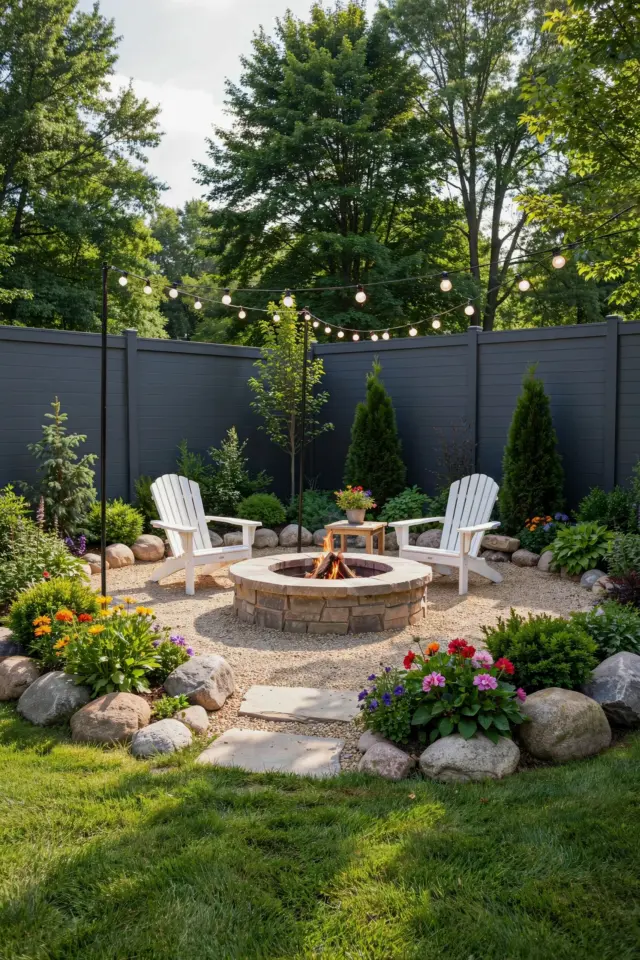
A meandering path loses its magic if it just dead-ends at a fence or a pile of compost. Every winding garden path should lead to something that invites you to stop and sit. In the Pinterest dream I mentioned, it’s a rustic bench under an arbor. You don’t need an arbor, an old wooden chair, a birdbath, a small fire pit, or even a simple stone circle works.
Place that destination at a natural high point or a shady spot where the curve of the path hides it until the last moment. This creates anticipation. When visitors round the final bend and discover your cozy seating area, they’ll feel like they’ve found a hidden room in the garden. If you can’t put a bench, put a potted plant or a gazing ball. Something, anything, that gives the path a purpose.
Overlooking Light and Shadow
Dappled sunlight is part of what makes a winding garden path feel like a secret escape. Yet many people plant their path in full sun because it’s easier, or they tuck it under dense shade where moss grows and the path stays soggy. The goal is balance.
Observe your yard at different times of the day. A path that gets morning sun and afternoon shade from a nearby tree or arbor offers shifting light patterns that make the walk feel alive. If you have no trees, add a low arch or a teepee of climbing beans or clematis. The shadows they cast will break up the heat and give your path that dreamy, filtered glow. Avoid spots where the path will be in deep shade all day, the herbs won’t spread well, and the stones will grow slippery with algae.
Rushing the Layout Curve
One of the biggest mistakes is trying to design the curve on paper or with a straight line in your head. You need to walk the path. I use a heavy garden hose (the kind that doesn’t kink) and lay it out in a loose S-curve. Then I walk it forward and backward for ten minutes, adjusting the bends.
A good curve should feel natural. Avoid sharp Z-turns or tight S-curves that force you to step off the stones. Instead, think of a lazy river. Each bend should open up a new view of the garden. The most common error is making the radius too tight, you end up stepping off the path or tripping. A radius of at least three feet per curve keeps the walk comfortable. Mark the center of the path with flour or spray paint, then adjust until it feels right. Trust your body, not your ruler.
When you finally set the stones, stagger them so each one overlaps a little with the next. This creates a stepping rhythm that says “slow down, wander.” That’s the whole point of a winding garden path. It’s not just a way to get from point A to point B. It’s an invitation to pause, breathe, and notice the lavender brushing against your ankles.
Grab your garden gloves and start sketching with a hose. Your cozy backyard retreat is waiting, one irregular stone at a time.
#gardenpath #gardening #backyardideas #cozyoutdoor #pathdesign
Leave a Comment